What is I-CBT?
A Different Way to Understand OCD
Inference-Based Cognitive Behavioral Therapy (I-CBT) is a modern, evidence-based approach to treating Obsessive–Compulsive Disorder (OCD).
Rather than focusing on anxiety or the need to tolerate uncertainty, I-CBT helps people understand how obsessional doubts are created in the first place — through a reasoning process that disconnects them from reality.
In OCD, the problem is not uncertainty itself, but a false doubt created by the imagination. I-CBT shows how this false doubt arises and teaches you how to return to the direct, trustworthy experience of reality.
How OCD Creates Doubt
When someone experiences OCD, it often feels as if something might be wrong—even when everything appears fine. You may know, logically, that the door is locked or that you didn’t cause harm, yet still feel you can’t be sure.
This happens because OCD begins when the mind leaves the real world and enters an imagined one. Instead of trusting direct evidence from your senses (“I can see it’s locked”), reasoning shifts toward what-if possibilities (“What if I didn’t lock it properly?”).
This imaginative reasoning process—known in I-CBT as inferential confusion—makes an imagined possibility feel as if it could be real, even when it isn’t. The result is obsessional doubt: a feeling of uncertainty that comes not from reality, but from imagination.
From Imagination Back to Reality
I-CBT helps people identify the exact moment they “cross over” from reality into imagination. It teaches you how to trace and correct the reasoning errors that keep the doubt alive, so that you can reconnect with the here and now.
In therapy, you learn to distinguish between what is imagined possible and what is actually happening. Through structured exercises, you begin to see that the obsessional doubt never came from a real threat, but from a mental story that only felt real.
By rebuilding trust in your senses and everyday reasoning, obsessional doubt loses its power—not through reassurance or exposure, but through understanding.
The Inner and Outer Wheel of OCD
To help visualize how OCD operates, I-CBT describes it as two interconnected levels of functioning—the Inner Wheel and the Outer Wheel.

The Inner Wheel represents the hidden reasoning and imaginative processes that build obsessional doubt long before it appears as anxiety or compulsive behavior. Rather than beginning with an intrusive thought, OCD starts upstream—within a pattern of distorted reasoning that makes imagined possibilities feel real and personally significant. This process unfolds through three key components:
- Obsessional reasoning processes — the core distortions that set doubt in motion, including distrust of the senses and self, unchecked imagination, and misapplied logic and relevance.
- The feared possible self — personalizes the doubt by linking it to vulnerable self-themes such as morality, responsibility, or competence, creating the sense that the doubt reveals something essential—and threatening—about who you are.
- The obsessional narrative — weaves these elements into a coherent, logical-seeming storyline that makes the eventual doubt feel inevitable rather than hypothetical.
By the time the doubt surfaces, the Inner Wheel has already done its work—so the doubt feels self-evident and undeniable.
The Outer Wheel represents how obsessional doubt is experienced and acted upon. Here appear the familiar parts: the primary obsessional doubt, its secondary consequences (what it would mean), the rising emotions (anxiety, guilt, disgust), and the compulsions (checking, reassurance, avoidance, mental reviewing) that follow. Compulsions are not merely coping strategies; they enact the Inner Wheel’s logic and unintentionally affirm the doubt as relevant.
I-CBT works from the inside out—exposing inferential confusion, dismantling the Trifecta, de-personalizing the feared self, and replacing the obsessional narrative with a reality-based one. When the Inner Wheel quiets, the Outer Wheel (anxiety, urges, and compulsions) loses its fuel.


What Happens in I-CBT Treatment
I-CBT is a structured, collaborative form of psychotherapy that helps you understand how obsessional doubts are created, maintained, and resolved.
Rather than provoking anxiety, it focuses on the reasoning process—the inferential confusion described earlier—that gives rise to false doubt.
To make this concrete, I-CBT highlights the OCD Trifecta—which are the obsessional reasoning processes that form the first stage of the Inner Wheel and drive the crossover into imagination:
- Distrust of the senses and self
- Boundless imagination
- Misapplied logic and artificial relevance
Together, they generate a convincing but entirely hypothetical story that gives rise to obsessional doubt.
Step by step, therapy helps you:
- Identify the obsessional story and its reasoning chain.
- See exactly where imagination replaced reality and how the doubt was constructed.
- Understand the personal themes and feared possible self that give the doubt meaning.
- Build a reality-based narrative grounded in sensory evidence and self-trust.
- Strengthen perceptual confidence, cognitive flexibility, and resistance to future doubt through Reality Sensing.
You come to recognize that obsessional doubts are not genuine uncertainties but false inferences disconnected from reality. Once the faulty reasoning is corrected, the doubt loses power—and with it, the anxiety and compulsions it once produced.

How I-CBT Differs from Traditional CBT or ERP
I-CBT belongs to the broader cognitive-behavioral family, but it addresses a different problem and intervenes at a different point in the obsessional process.
Traditional CBT approaches, such as appraisal-based therapy, focus on how people interpret or appraise intrusive thoughts once they have already occurred. These methods work downstream, helping clients reframe the meanings attached to thoughts (for example, “Having a thought doesn’t make it true or dangerous”).
Similarly, Exposure and Response Prevention (ERP) also operates downstream—after obsessional doubt and anxiety have taken hold—by helping individuals face feared triggers while resisting compulsions.
I-CBT works upstream, before the doubt even forms.
It corrects inferential confusion—the crossover from reality into imagination—driven by what I-CBT calls the OCD Trifecta (distrust of the senses and self → boundless imagination → misapplied logic and relevance).
By addressing the reasoning process that creates obsessional doubt, I-CBT prevents the cascade of anxiety and compulsions that traditional CBT or ERP aim to manage.
| Topic | Traditional CBT / ERP | Inference-Based CBT (I-CBT) |
|---|---|---|
| Point of Intervention | Downstream — after doubt/anxiety are active; aims to change responses to triggers. | Upstream — before doubt takes hold; corrects inferential confusion and the Trifecta that builds false doubt. |
| Mechanism of change | Exposure + response prevention (habituation / inhibitory learning). | Reasoning correction + reality reconnection (identify crossover, dismantle obsessional narrative; Reality Sensing restores perceptual trust). |
| Role of anxiety/uncertainty | Anxiety is engaged and tolerated; uncertainty is practiced. | Anxiety becomes irrelevant once doubt is exposed as false; no uncertainty-tolerance goal. |
| What you do | Deliberately face feared cues and resist compulsions. | Act from what you already know (senses, present facts); no testing or provoking fear. |
| Felt experience | Can be emotionally intense. | Often experienced as logical, clarifying, and empowering. |
| Target | Managing consequences of doubt. | Eliminating the source of doubt so consequences fade naturally. |
Bottom line: ERP helps people cope with the effects of obsessional doubt. I-CBT helps people stop creating that doubt in the first place.
Evidence and Effectiveness
I-CBT is supported by over two decades of clinical and research evidence. Randomized controlled trials have shown that I-CBT is as effective as exposure-based therapy, with large treatment effects and high acceptability among participants.
Because it focuses on reasoning rather than anxiety exposure, many people find I-CBT more comfortable and more aligned with their way of thinking. Research continues to explore how I-CBT changes both thought patterns and brain processes related to OCD.
You can learn more about research findings on our Research and Evidence page.
Who Can Benefit from I-CBT
I-CBT is suitable for people with all forms of OCD — whether the obsessions involve contamination, harm, morality, relationships, health, or order.
While the themes may differ, the reasoning process behind them is the same: an imagined possibility is treated as if it could be real.
By targeting this reasoning process directly, I-CBT helps individuals break free from compulsive checking, mental reviewing, reassurance seeking, and other behaviors that maintain the obsessional doubt.
Learn More or Find Help
We invite you to explore this website, where you’ll find resources and guidance for individuals, families, and professionals on applying Inference-Based Cognitive Behavioral Therapy in everyday life.
To connect with a therapist trained in this approach, visit our Therapist Directory.
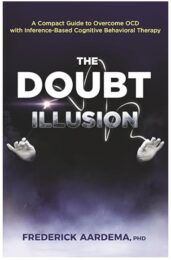
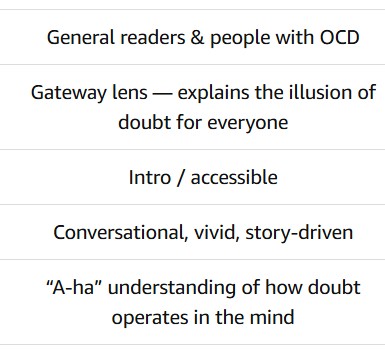
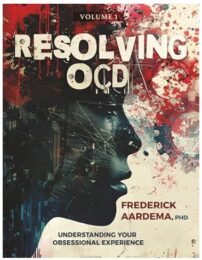
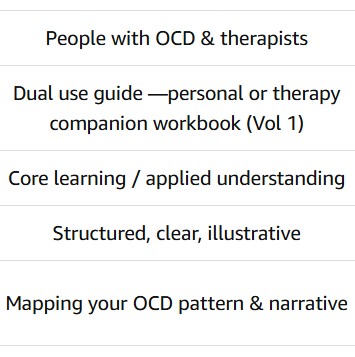
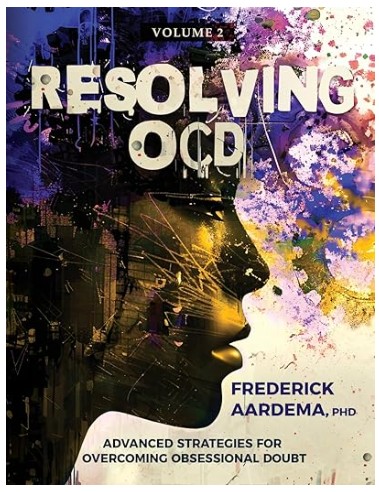
If you’d like to learn more about I-CBT on your own, three self-help books are available: The Doubt Illusion and the Resolving OCD series.
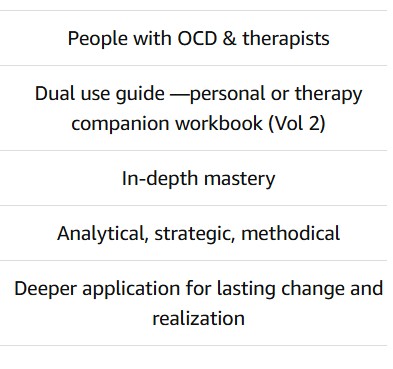
Together, these books are designed to help you understand and apply I-CBT principles in daily life — whether you’re just beginning your recovery journey or looking to deepen the progress you’ve already made in therapy.